

(954) 495-9512 Florida - Ft Lauderdale
(305) 395-4915 Florida - Miami & Tampa
(206) 388-3871 Seattle Washington
(713) 589-2662 Houston - Texas
(902) 482-3169 Halifax Nova Scotia
(604) 628-9516 Vancouver BC
(905) 918-0550 Toronto Ontario
Customer Service:
We provide real-time
customer service though Live Chat, e-mail and by toll free number. You
will find our friendly staff always willing to help. During Emergencies
we never shut down. Operations are 24/7. Call us toll free or chat
live. We provide the service you simply can't get from a big box store.
Parts Supply:
We carry a large
selection of replacement parts. In fact, we are often called upon by
other generator owners for parts and service and are one of the largest
gas and diesel generator parts suppliers in North America.
Why most people pick diesel over gas:
Diesel powered generators remain the number-one choice for standby and emergency power systems worldwide.
You rely on many
appliances and systems in your home or business for your health,
comfort and security. Most depend completely on utility supplied
electricity. It makes sense to have a backup diesel generator system
that will keep your family comfortable and your home safe in a power
failure. Our diesel generator sets are rugged dependable and reliable
with excellent mechanical and electrical performance.
Careful preparation is
essential to select, buy and install a backup system. Don't leave it to
the last minute. You should have time to learn how to use the system in
advance. During a power failure, you may not be able to find suitable,
reasonably priced equipment, fuel, and/or installation. Keep the system
simple, so you and your family can operate and maintain it. Your
emergency system must work reliably when needed.
A backup power system
should power most efficient appliances. We carry a wide range of
products perfect for home, construction and emergency standby power.
Simple operation with wireless remote starting and warranties that help
protect you in the future. We remain a leader in the Industry and are a
proud member of the Better Business Bureau.
Portable Generators:
Picking a generator that
is right for you will depend on your power needs. Portable generators
are the most popular for lighter use because of their ease of use.
Portable generators are often kept protected in a shed or garage until
needed and then wheeling them outdoors. You have the ability to move
them from one location to another.
Large Diesel Standby Generators:
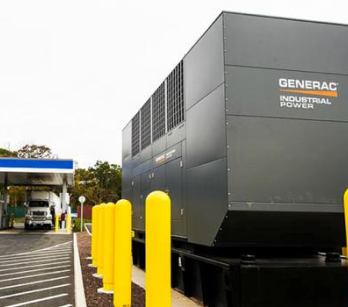
Larger diesel generators
use slower turning and more powerful engines that last longer and are
able to run full time. The engines are water cooled and often they turn
on automatically when the power fails making restoring power simple.
Increased power means you can power your whole home or business rather
then just a few critical devices and that makes withstanding prolonged
power outages more comfortable and easier to cope with. Often the fuel
tanks are able to hold days worth of fuel.
How much power do you need?
The silent type enclosed
diesel generators are one of the most popular for residential use.
Many are satisfied with a 6000 Watt Diesel Generator to power just the
necessities such as your fridge, freezer, pumps, television, microwave
and lights. You can even have it hooked up directly to your home using
a generator transfer switch.
For heavy loads to
operate such as whole home heating and air conditioning, pumps and
dryers a larger diesel generators are your only option. The cost are
very reasonable considering the extra power reserve you will have. You
can often operate normally without the worry of overloading and
frequent refueling. Diesel Standby Generators add security and comfort
and are very simple to operate.
Heating and Air
Conditioning require a lot more power then a portable generator can
provide. While some portable generators may almost have enough power,
they operate at 3600 rpm shortening their life where as larger units
operate at half that. 1800 rpm.
Noise Levels:
There are two type of
diesel generators. Open frame and closed frame. The closed frame are
also known as "silent generators" The larger closed frame units have
much larger mufflers and sound insulation to make them no louder then
the level of two people taking to each other a few feet away.
Diesel or Gas Generators:
Why diesel-power instead
of gasoline? Unlike gas engines, diesels have no spark plugs to
replace, or carburetors to rebuild and service. Diesels generally burn
less than half the fuel that gas engines do to do the same amount of
work. Diesels regularly outlast gas engines ten-to-one.
For example, the average
gas engine powering a generator will run for around 1000 hours before
needing replacement or a complete overhaul. And that’s an average. The
average diesel engine will run 20,000 hours before needing any service
beyond routine maintenance, but many make it to 50,000 hours, and some
a lot longer than that. At four hours a day, even 20,000 hours works
out to nearly fourteen years.
Fuel Savings:
The fuel-efficiency
alone is a good reason to buy diesel. It’s also a lot safer to store.
It’s flammable, but not explosive like gasoline. And although diesels
sometimes produce more visible exhaust, it is less toxic than the
emissions from a gasoline engine. A well-tuned diesel, by the way,
produces no visible exhaust except briefly, under severe load-changes.
Diesels sound scary to
some people who are unfamiliar with them, but they are actually simpler
in design and construction than gas engines. If you can service a gas
engine, you can service a diesel. And it requires less service.
The only maintenance
generally required is changing the oil, and changing the fuel, air, and
oil filters. This much is the same as on a gas engine. What you won’t
have to deal with is tune-ups. No carburetor adjustments, no
distributor or magneto to burn out, and no spark plugs to need periodic
cleaning and replacement.
Oil changes done on
schedule are critical and make the difference between an engine that
wears out prematurely and one that runs nearly forever.